
Time is On Our Side. Or Maybe Not
Massive cuts across the National Institutes of Health (NIH) result in the cancellation of critical scientific research and discovery
Time is on our side... unless you’re conducting groundbreaking, multi-year scientific research to find out why US veterans have twice the risk of developing amyotrophic lateral sclerosis (ALS) compared to non-veterans. Commonly known as Lou Gehrig’s Disease, it is a deadly disease with no known cause or cure. Funded by NIH grants, Harvard-based researchers were making real progress in understanding the cause of ALS and potentially many other neurological disorders.
Exciting, right? Yes. Then, in May 2025, the NIH-sponsored grant was suddenly “terminated.” I remember watching the interview below with Anderson Cooper, where Dr. Marc Weisskopf described the exciting possibilities and progress they were working toward. He then explained that in 45 days, they would no longer be able to pay staff, operate the lab, or support sample storage (such as nitrogen gas needed to keep samples at a deep, cold, and stable environment). The research program was to be “turned off,” resulting in destroyed samples and incomplete datasets with measurable points, such as timing intervals.
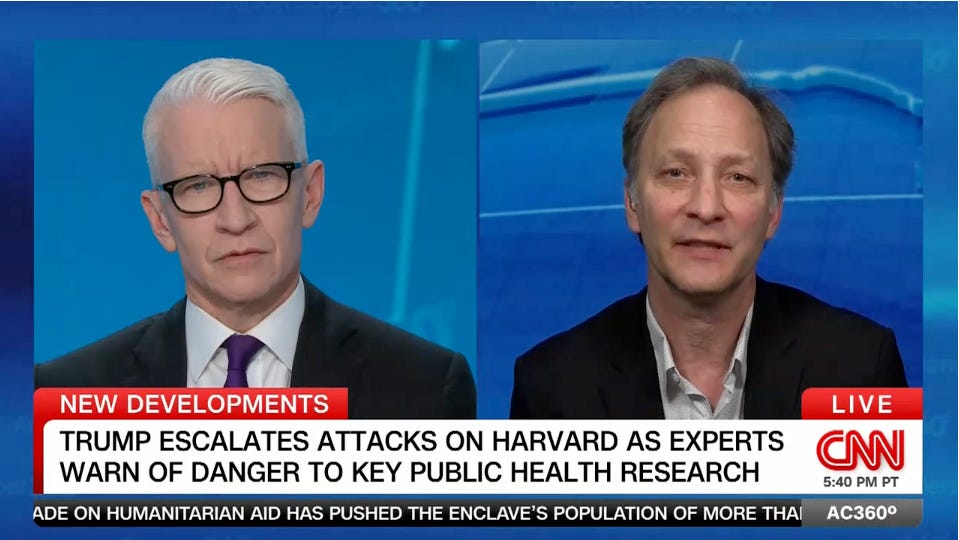
Time stands still. I remember having a visceral reaction to the interview, thinking, ‘Wow. The Administration truly doesn’t understand enough to care.” Scientific breakthroughs are more than a “flash in the pan” moment. When research answers one question, it often raises many new questions that need answers in different populations and directions. Shutting everything down for a month likely means losing years of progress toward saving lives.